

EGCO Group Champions Energy Flexibility to Tackle the “New Power Trilemma”
Every form of economic growth is powered by energy. Electricity that is adequate, secure, reasonably priced and sustainable is the cornerstone of attracting investment, strengthening competitiveness and supporting the industries of the future – even amid volatility in global energy markets.
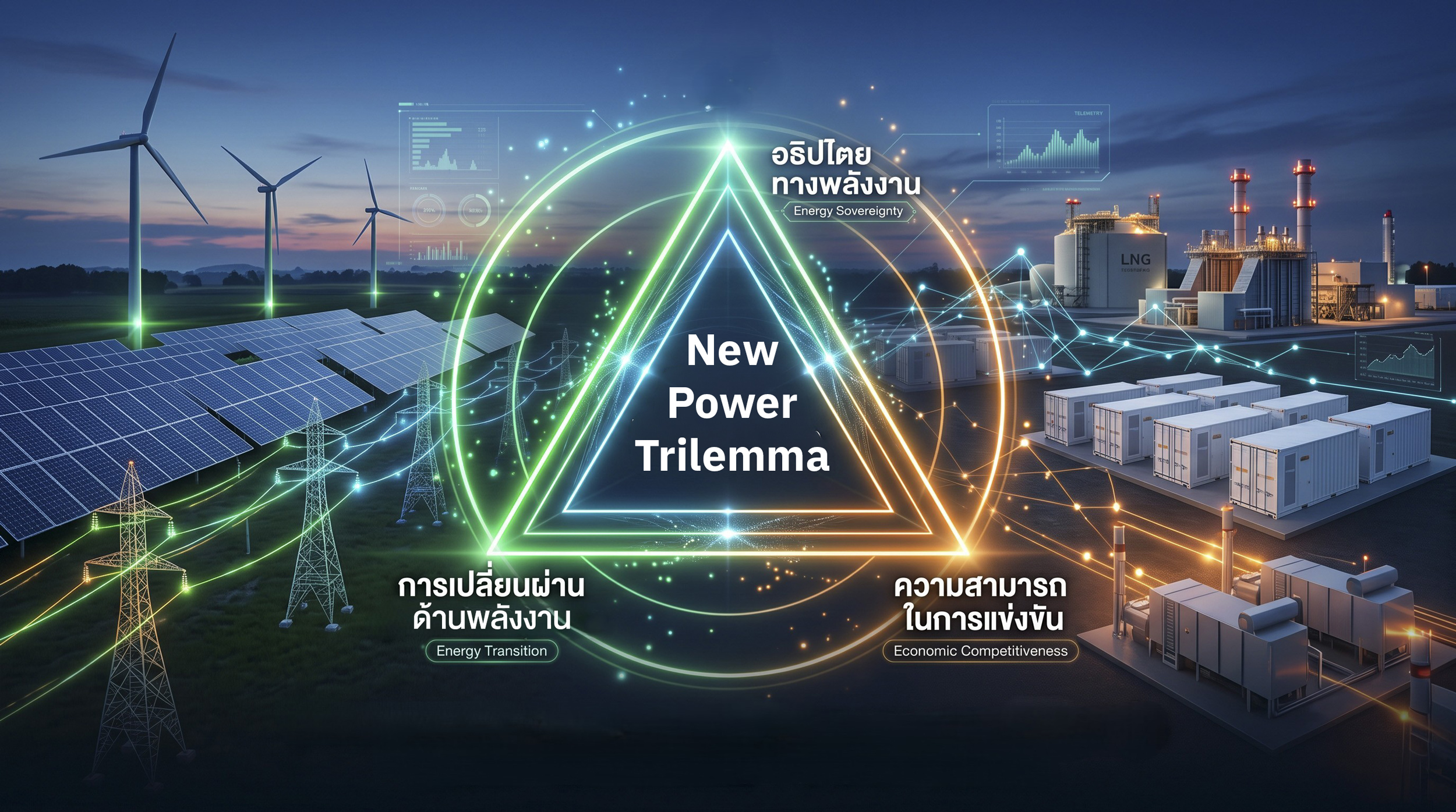
This challenge lies at the heart of “The New Power Trilemma: Sovereignty, Transition & Competitiveness,” a panel discussion held on the Electrification Theatre stage at Gastech 2026 in September. The session examined energy challenges across three major dimensions: energy sovereignty, the energy transition and economic competitiveness. As an energy business leader from Southeast Asia, Mr. Tawatchai Sumranwanich, President of Electricity Generating Public Company Limited or EGCO Group, shared his perspectives on the panel.
Diversification as a Buffer Against Energy System Vulnerability]
Speaking from EGCO Group’s perspective as a regional power producer, Mr. Tawatchai believes Southeast Asia’s energy and power systems remain resilient. However, every stakeholder faces a growing challenge in keeping the system secure while managing rising costs for both the public and private sectors amid volatility in natural gas prices and global fuel markets. At the same time, sustainability goals must continue to be pursued.
Asked which dimension of the Power Trilemma poses the greatest challenge, Mr. Tawatchai pointed to energy sovereignty as it is directly intertwined with the other two dimensions - cost and sustainability. Progress for the energy industry therefore means pushing forward on all three at once.
“One approach is to diversify energy sources and supply chains, reducing dependence on any single source and widening the options for fuel procurement,” he said. “This goes hand in hand with developing regional power interconnections and accelerating the integration of renewable energy, with energy storage systems and modern grids adding flexibility. This emphasis on diversification and flexibility aligns with EGCO Group’s approach to portfolio management.”
Transitioning to Renewables While Ensuring Energy Security
On sustainability, EGCO Group aims to raise the share of renewable energy to 30% of its total generation capacity by 2030 - with this effort running in parallel with the development of additional technologies that strengthen the security and flexibility of the power grid. One of these advances is battery energy storage systems (BESS), which add flexibility to electricity management and help integrate renewable energy into the grid more efficiently.
The company has successfully reduced its environmental footprint through the use of hydrogen co-firing alongside natural gas at Unit 6 of the Linden Cogen power plant in the United States. It is also exploring further reductions through a feasibility study on ammonia co-firing at the BLCP power plant in Rayong, and the application of carbon capture and storage (CCS) technology at the Khanom power plant in Nakhon Si Thammarat.
Taken together, these efforts reflect the view that the energy transition is a more complex task than simply adding generation capacity from renewables. The system as a whole must accommodate diverse energy sources, deliver power securely and adapt when supply or demand changes.
Building Confidence to Pave the Way for Investment
Mr. Tawatchai further noted that the key challenge for energy investments today lies less in finding funding than in building investor confidence. Energy projects are long-term assets, and decisions made today will shape the energy system for decades. With this impact in mind, investors need assurances in the form of clear rules and regulations that provide sufficient confidence throughout a project’s lifetime.
This is why the first condition for attracting investors is a clear and consistent policy foundation that shows investors the long-term direction – on electricity demand, the use of technology and carbon-reduction goals.
The second is market mechanisms that value security and flexibility. These take into account power plants’ ability to respond to market demand, the role of energy storage and the services that keep the grid stable – reaching far beyond lowering power generation costs alone.
The third is commercial structures that support investment, such as long-term power purchase agreements (PPAs), transparent pricing mechanisms and creditworthy counterparties. These factors allow investors to assess risk with confidence and contribute funding for projects that strengthen the energy system in every dimension – from renewable energy and grid upgrades to new innovations for the future.
Energy readiness also influences investment in other businesses and industries, particularly electricity-intensive industries and data centers, which need stable power, suitable infrastructure and options for accessing renewable energy. These needs are part of the thinking behind EGCO Group’s development of the EGCO Rayong Industrial Estate (ERIE) – which reaches beyond provision of development space for industries to become a platform that brings together location, utilities and integrated energy solutions to serve customers, business partners and investors.
Preparing for an Uncertain Future
Mr. Tawatchai added that while some of the circumstances behind today’s volatility may ease, uncertainty has become part of the environment around the energy industry – from geopolitical risks, weather variability and technological shifts to rising electricity demand driven by the growth of digital technologies and AI.
“In this new environment, we should not simply plan for higher energy prices or any single crisis,” Mr. Tawatchai said. “An energy system can only fulfil its role as economic infrastructure if it is ready for multiple possible futures.”
The main task facing both EGCO Group and the Southeast Asian energy industry is to ensure that the options essential to energy security and transition to renewables receive full support under fitting marketing environments and mechanisms. With all of these factors in place, stakeholders can work together to build energy and power systems that are truly resilient, sustainable and competitive for our future.
